
Camilo Vargas
Student @ Cal Poly Athlete Advocate

Camilo Vargas
Student @ Cal Poly Athlete Advocate
My name is Camilo Vargas. I'm a bilingual student at The California Polytechnic State University in San Luis Obispo, California (Cal Poly). I'm majoring in Chemistry, intending to become a Doctor in medicine. I'm also a swimmer and represent Cal Poly in NCAA Division I competition. I'm an advocate for human rights, specifically about disparities in disease among ethnic and racial groups.
About Me
Hello everybody! My name is Camilo Vargas. I'm a bilingual student at The California Polytechnic State University in San Luis Obispo, California (Cal Poly). I'm majoring in Chemistry, intending to become a Doctor in medicine. I'm also a swimmer and represent Cal Poly in NCAA Division I competition. I'm an advocate for human rights, specifically about disparities in disease among ethnic and racial groups.
Current Activities
- Full time student
- NCAA Div I Swimming
- Research Advocacy
- Tutoring
- Soccer
Language Skills
Education Timeline
-
2022 - 2026
California Polytechnic State University
Bachelor of Science
Latest Articles

The COVID-19 pandemic impacted my hometown of Austin, Texas in a shocking way. According to the Austin American-Statesman “34% of the population Identified as Hispanic or Latino. But of more than 1,200 COVID-19-related deaths reported in the Austin Area. Hispanics made up nearly 50%”. Encountering this data sparked my interest in this topic and has pushed me to explore it for myself using the resources I have at my disposal both at my home and at California Polytechnic State University in San Luis, Obispo where I am majoring in Chemistry as a Pre-Med student. This winter I am enrolled in an independent research class where I get the opportunity to investigate this topic with Dr. Mariyln Tseng who focuses her own research on disparities in disease as it pertains to Asian American Population.
In preparation for my research I created a survey to find out about the perception people have regarding COVID-19 and disparities within Racial/Ethnic groups. The survey consisted of 6 questions and was given out to forty current high school seniors or college freshmen. Below are the results from the 6 questions and when possible I was able to compare the perception to the real outcomes using data from the CDC. Below are the results from the survey.
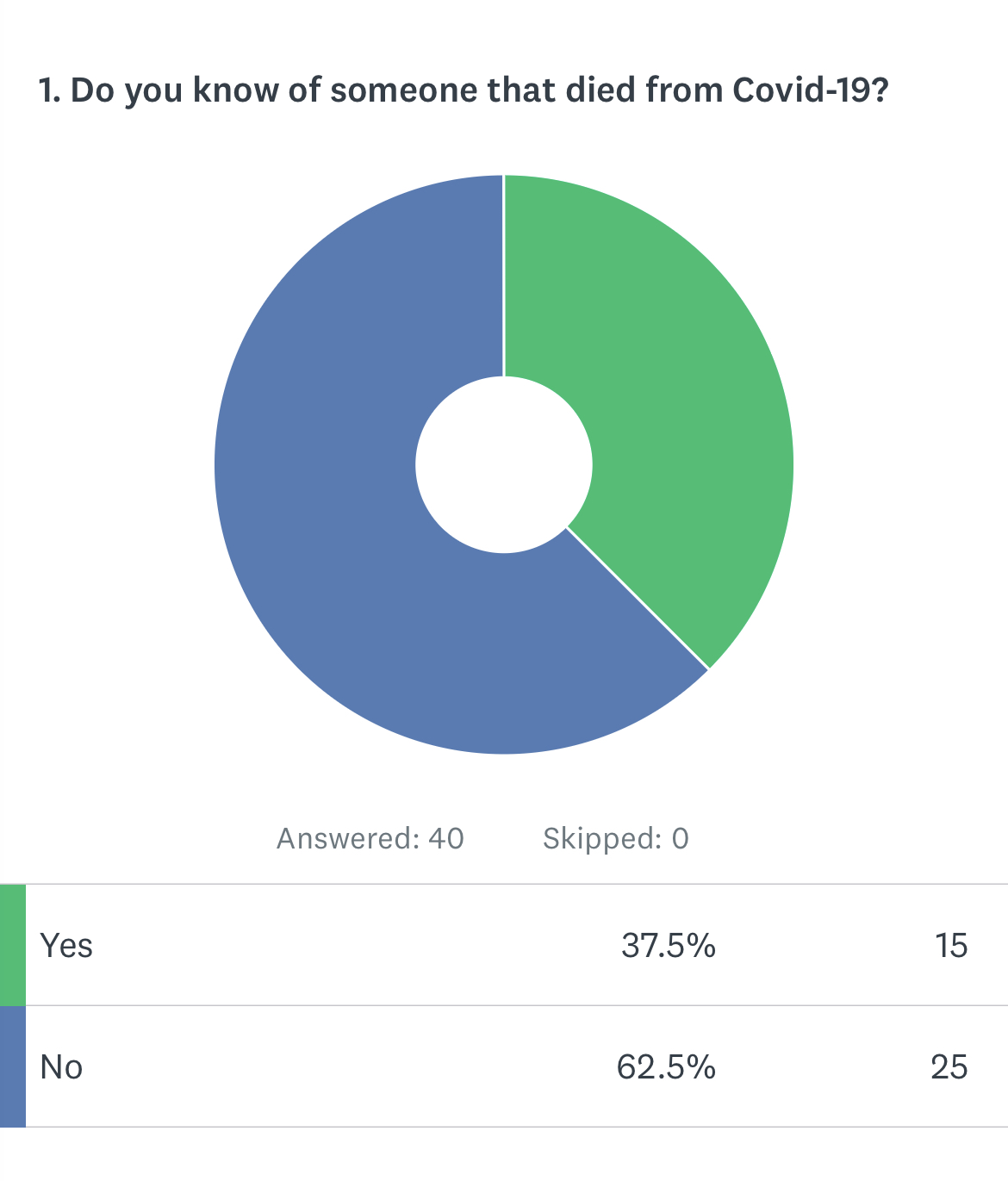
COVID-19 for many people, is something that only impacts others. Due to this, I wanted to get a feel for where my respondents stand when it comes to the impact of the virus. Did it hit home? Is my sample of people a good representation of the American population? The first question on the survey was “Do you know someone who died from COVID-19?”. 37.5% of the respondents said yes while 62.5% said no. This result from the survey is consistent with what was found in a poll done by AXIOS (1) which found one in three Americans know someone who has died from COVID-19.
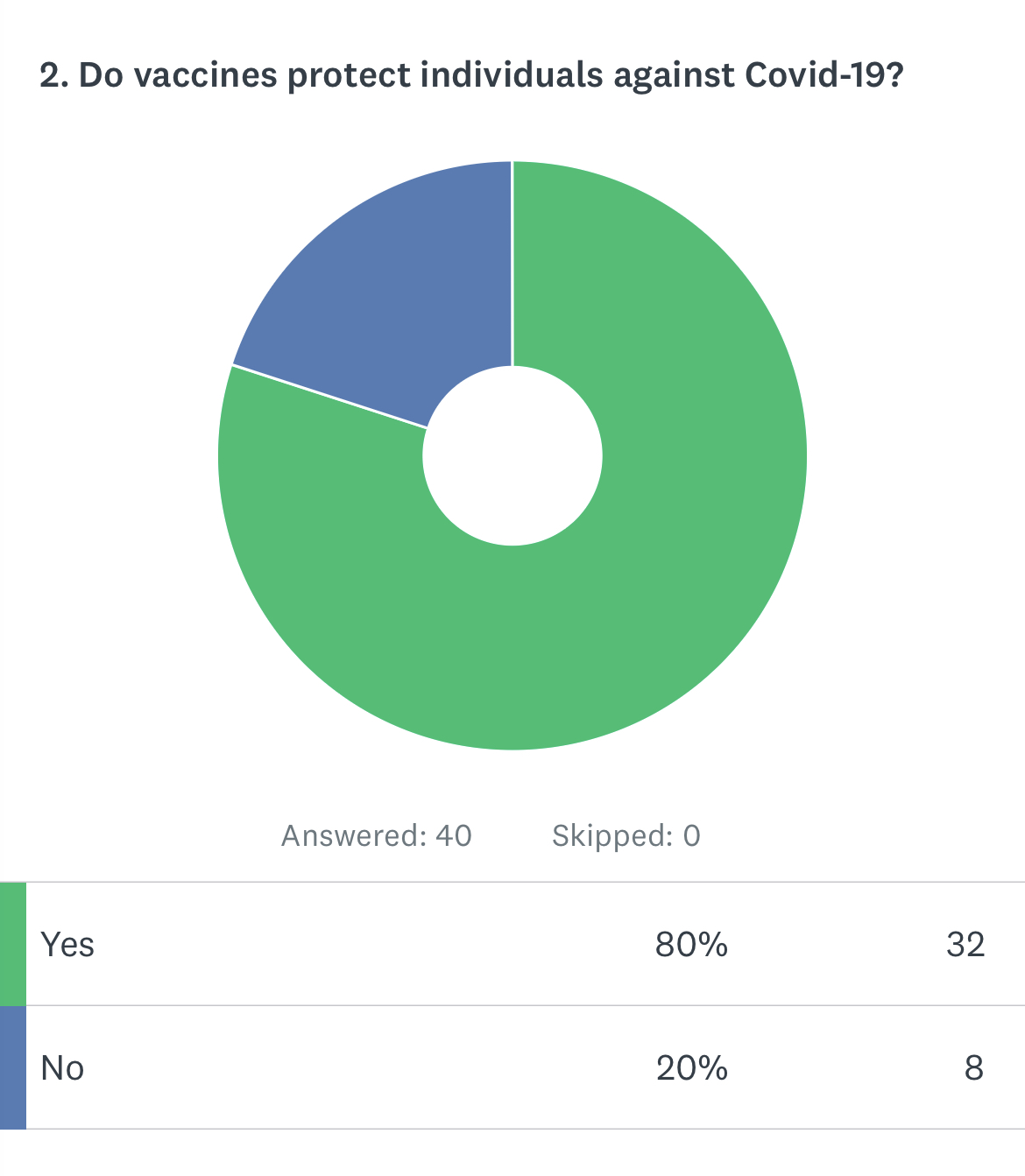
Vaccine hesitancy is prevalent around the world including the US because many people believe that vaccines aren’t effective. The respondents in my survey illustrate this. 20% of respondents believe that COVID-19 vaccines do not protect individuals against COVID-19. According to the CDC (2) “Vaccines are safe and effective” while citing how 660 million people have taken them safely.
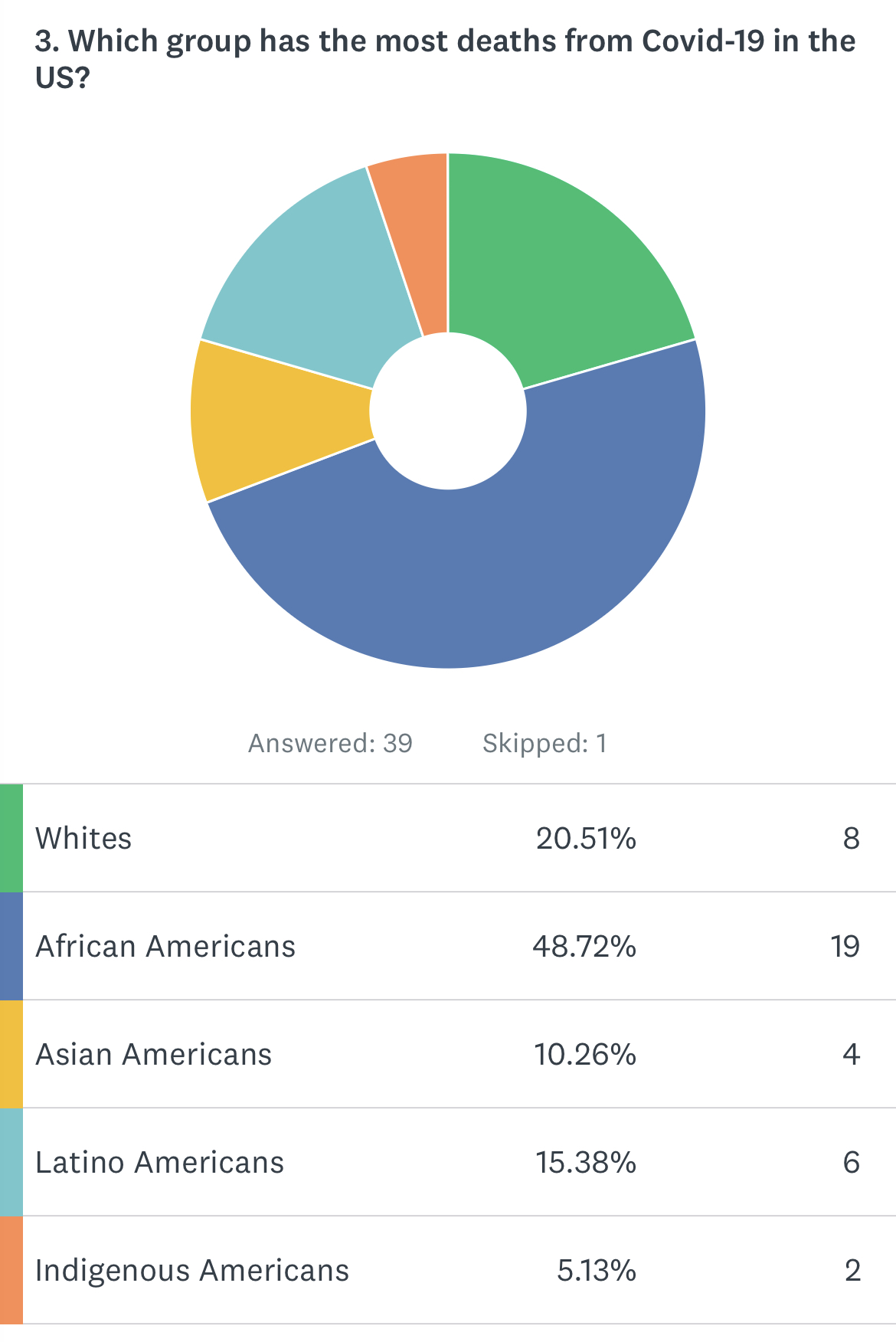
The third question on the survey asks about which group has the most deaths from COVID-19 in the US. What was quite surprising was most respondents thought that African Americans had the most, despite the fact that they only make up about 13.6% of the population according to the US census (3) and accounted for 13.9% of deaths. This could be the result from the increased awareness brought to the black community during the Black Lives Matter movement in 2020. In actuality, the group with the most deaths comes from the white Americans because they are the overwhelming majority in the United States’ population accounting for 60% of the population and 65% of the deaths. Hispanics account for 18.9% of the population and the second highest number of COVID-19 deaths at 15.5%.
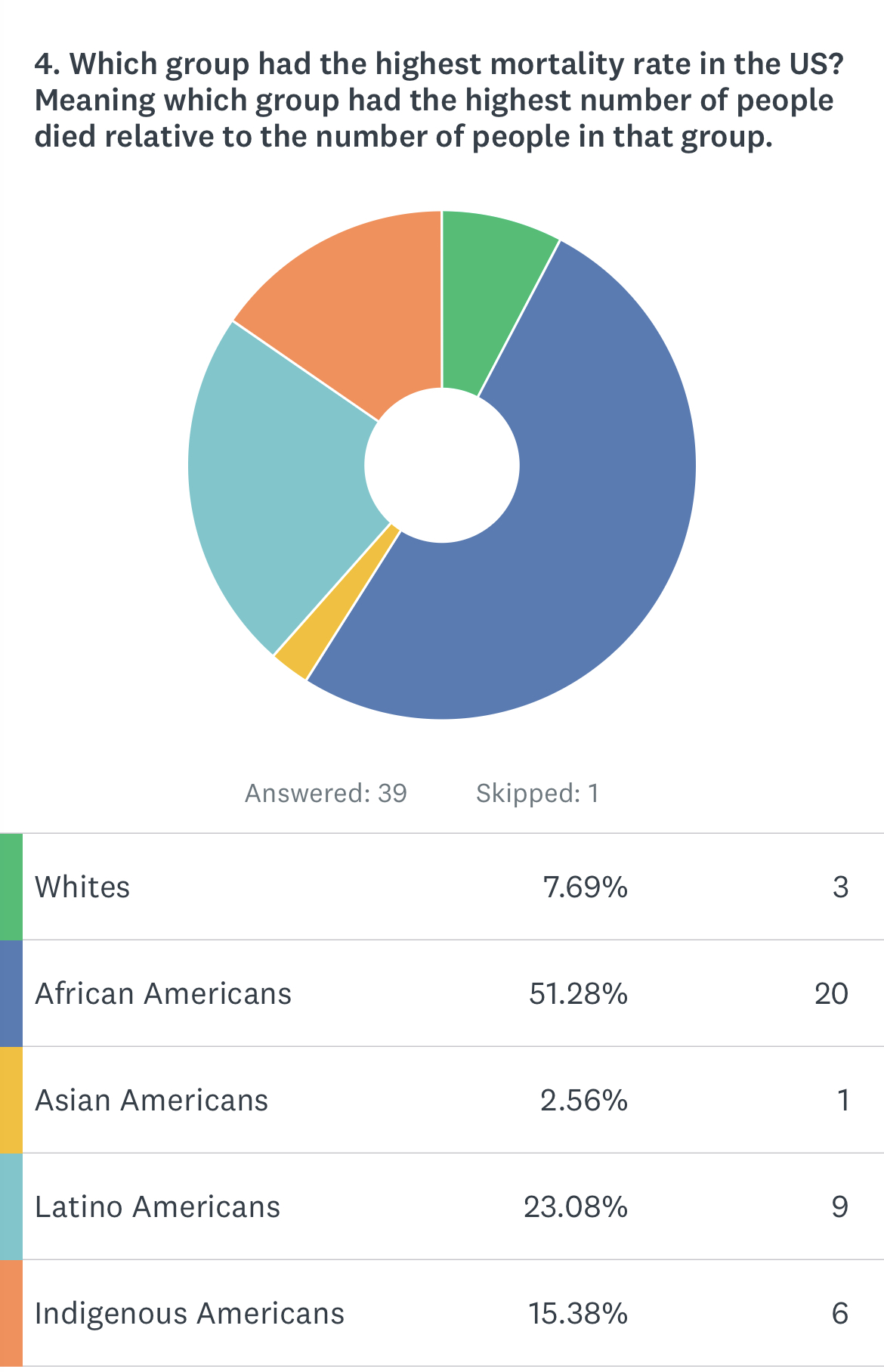
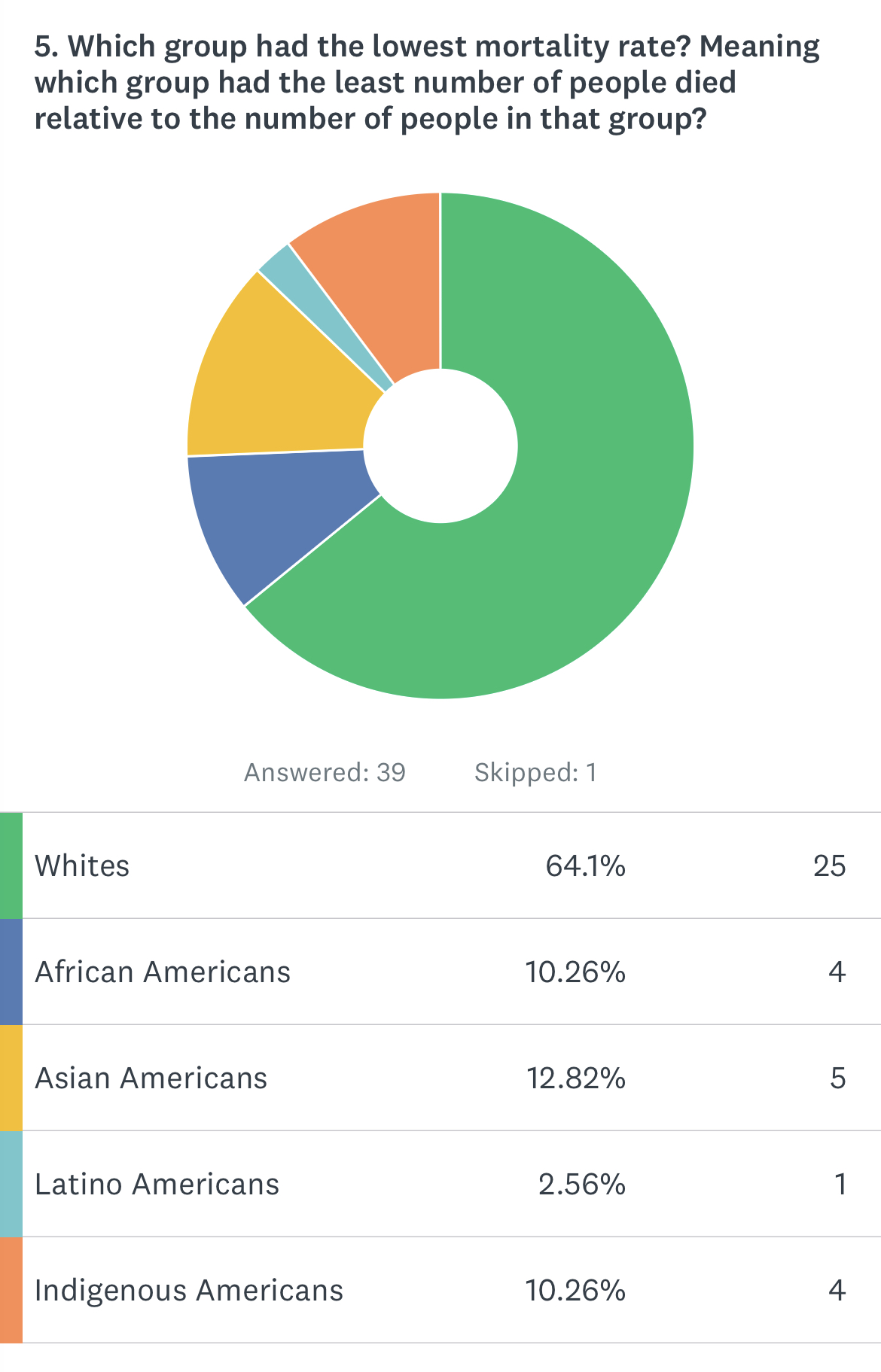
The fourth and fifth question ask about which racial group has the highest and lowest mortality rate, meaning which group had the highest percent of their population die. The respondents overwhelmingly answered that African Americans had the highest mortality. The CDC found that the Indigenous Americans had the highest mortality (480 deaths per 100,000), followed by Black Americans (364 deaths per 100,000), Then White Americans (358 deaths per 100,00), then Latino Americans (272 deaths per 100,00) and lastly with the lowest mortality rate are Asian Americans (173 deaths per 100,00).
The APM research lab (4) was able to adjust the mortality rate data to account for differing age distribution among the racial and ethnic groups. Due to the fact that COVID-19 predominantly affects older people it is important to adjust for age otherwise disparities can be overestimated or underestimated. Once the data is adjusted by age, the indigenous people continue to have the highest mortality rate at 589 deaths per 100,000, followed by the Hispanics at 495 deaths per 100,000. Hispanics have moved up from the 272 deaths per 100,000 to 495 deaths per 100,000, the biggest jump of all racial groups. The third highest adjusted mortality rate was the African Americans at 472 deaths per 100,000, and the fourth is the white Americans at 292 deaths per 100,000 (the rate dropping substantially due to their larger older population), while the Asians stayed at the lowest mortality rate of 213 deaths per 100,000.
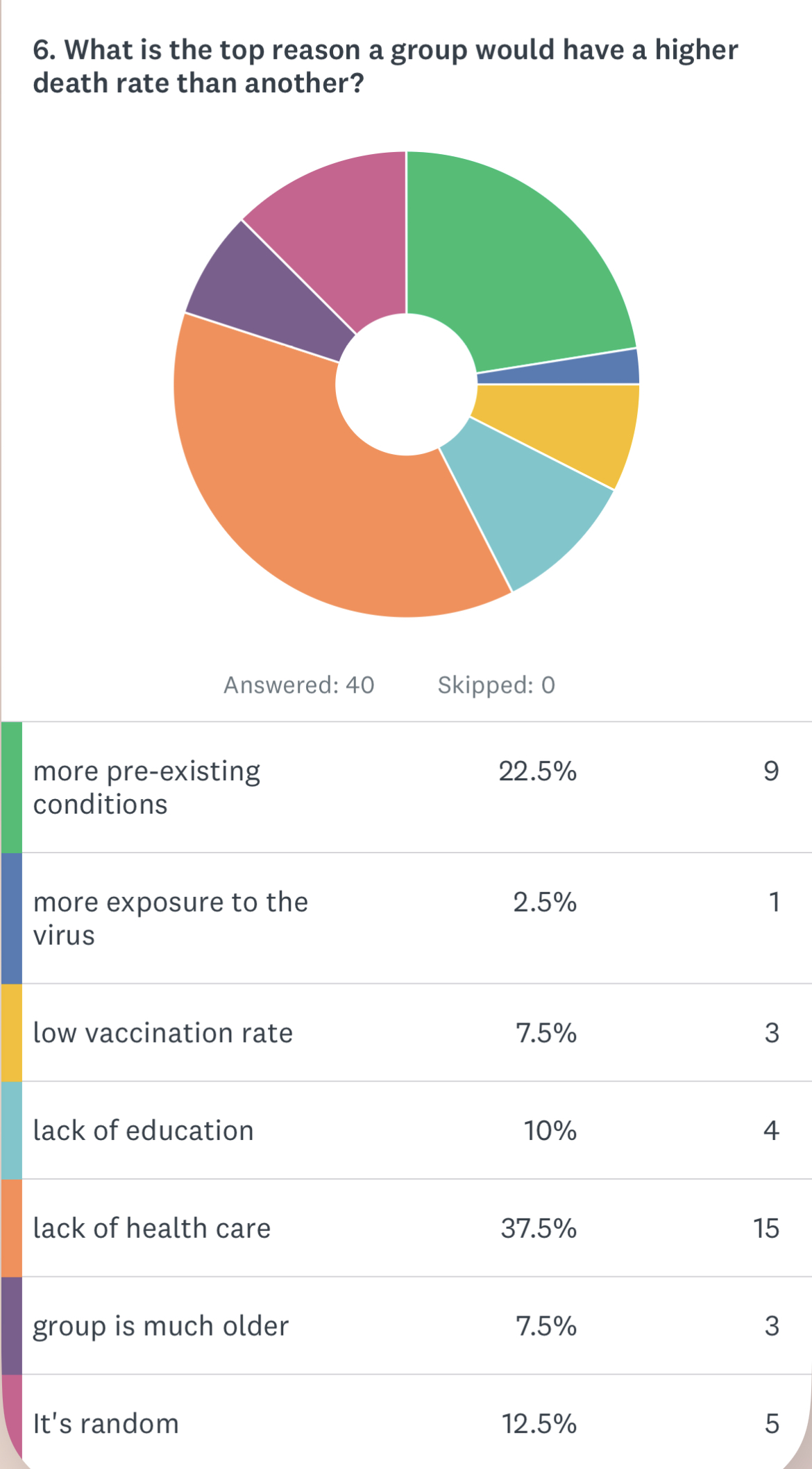
The final question on the survey asks about the main factor of why a group could have a higher death rate than another. The purpose of this question was to find what respondents think is the main reason a group could have a higher COVID-19 mortality rate than another. The highest picked answer was lack of healthcare which accumulated 37.5% of the responses. Due to the fact that this survey was taken in the United States, I find it interesting that people find distrust in the healthcare system to the point that it could be harming certain people. It would make more sense for this kind of response to be found in a less developed country, but for this to be found in the United States is surprising.
References links
(1) Know someone that died from Covid
(2) Safety of vaccines
(3) US Census
(4) APM Research, The color of covid